- Last Updated Oct 19, 2026Published Date Oct 01, 2026
You launch a Facebook campaign on Friday and wake up on Monday to 140 leads. Lovely. By lunch your team has called 30 of them: eight numbers are switched off, six people "never filled any form", and two want to know which company you are.
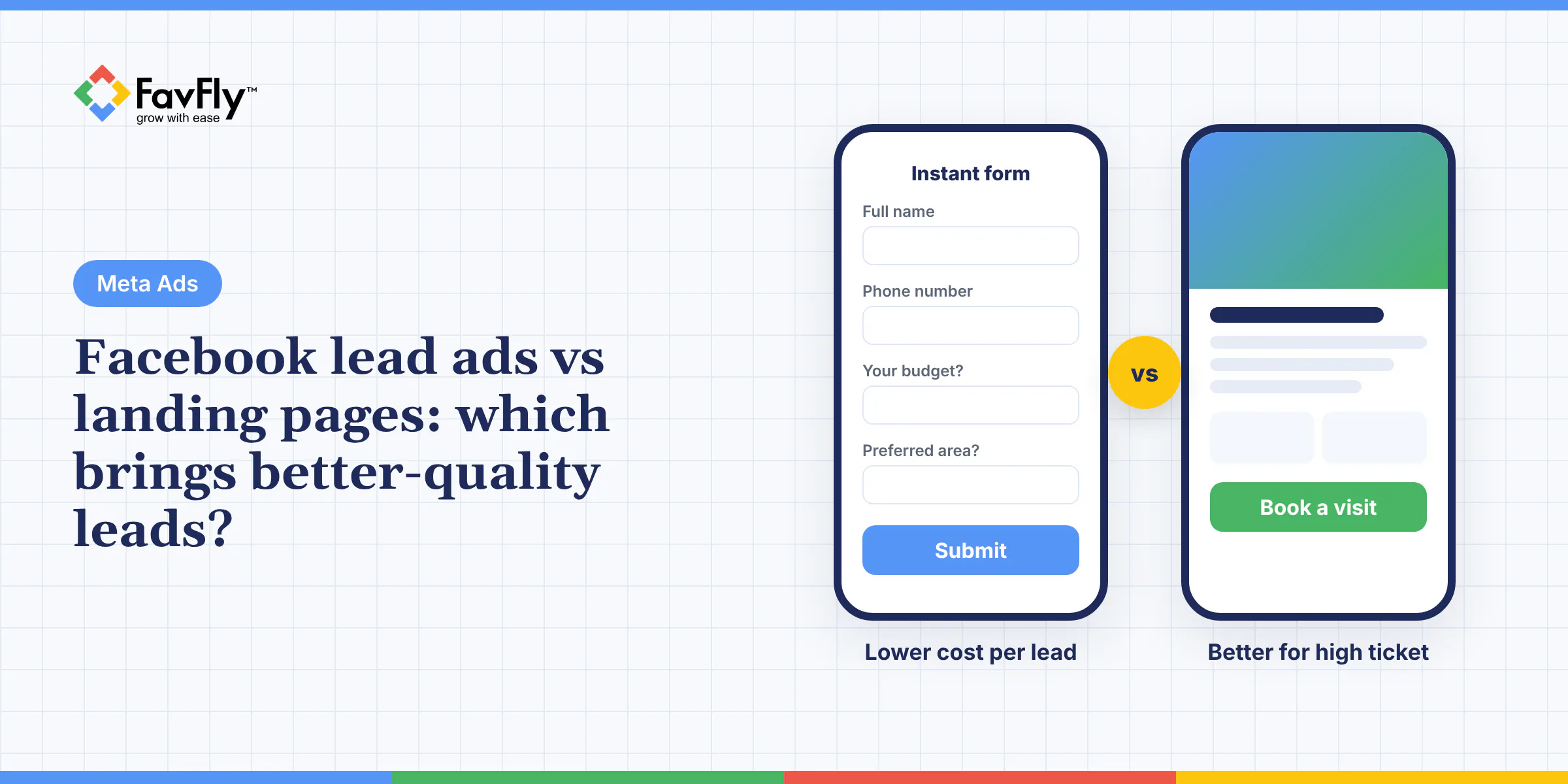
That's usually how the Facebook lead ads vs landing page argument starts. The short answer is that instant forms almost always give you a lower cost per lead, while landing pages often give you a lower cost per qualified lead for high-ticket purchases people think hard about. For most Indian small businesses, the best results come from a tightened instant form (the Higher intent type, a few qualifying questions, SMS verification, and someone calling back within minutes), with a landing page kept for the big-ticket offers.
Quick answer: Facebook lead ads use Meta instant forms that open inside Facebook or Instagram, so leads come cheap and fast but include plenty of casual sign-ups, while landing pages send people to your website, cost more per lead and filter out people who aren't serious. Judge both on cost per qualified lead (a lead your team can sell to), because cost per lead alone misleads. Use instant forms for low and mid-ticket offers, landing pages for high-ticket or B2B, and click-to-WhatsApp ads when your team closes on chat.
What's the difference between Facebook lead ads and landing pages?
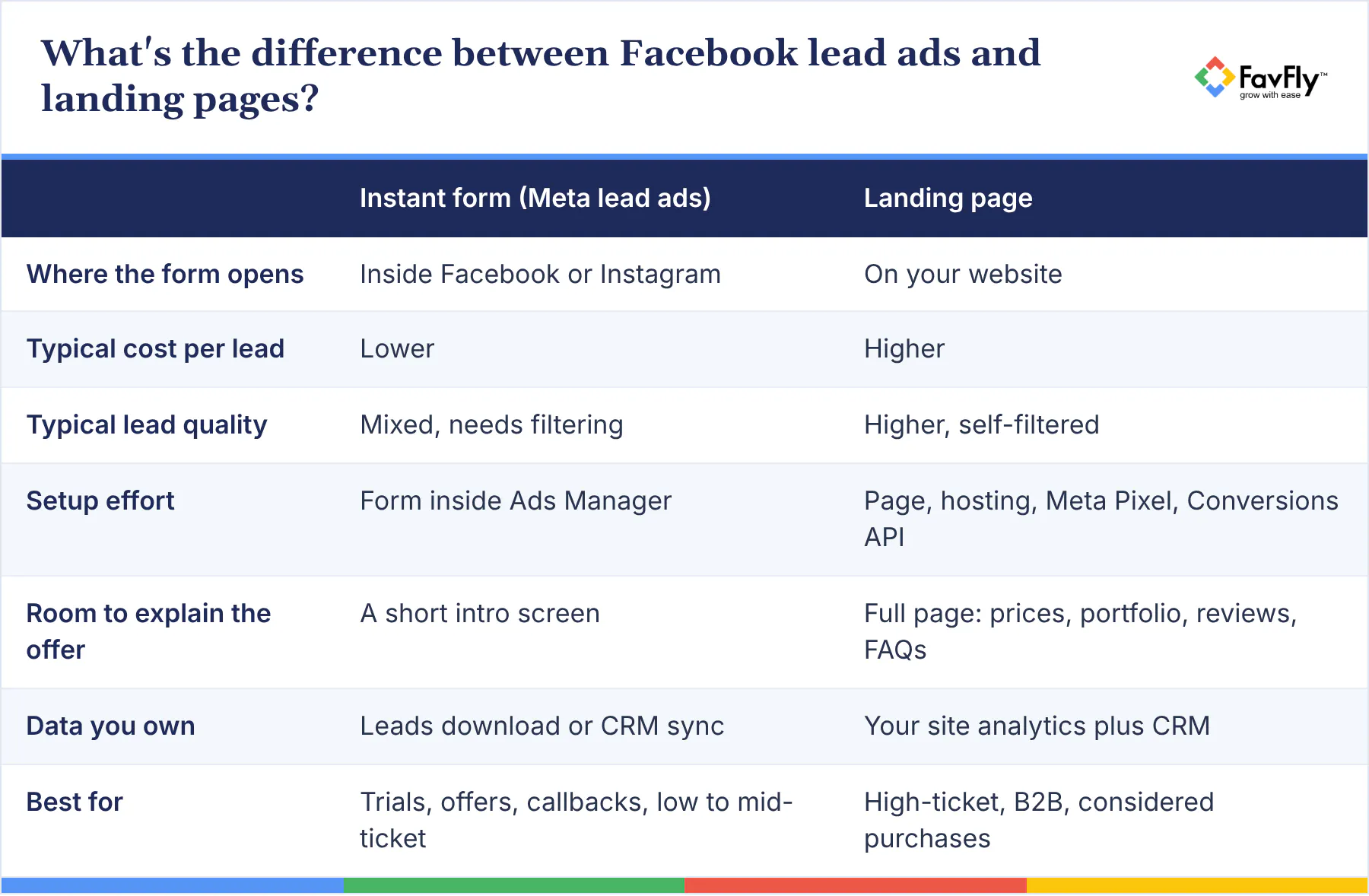
Mostly, where the form opens. Tap a Facebook lead ad and an instant form pops up right inside Facebook or Instagram, often with your name, phone and email already filled in. Tap a landing page ad and you're sent to the business's own website, where you read a bit and then fill a form or tap WhatsApp.
Meta describes lead ads with instant forms as a way to collect information from interested people "without requiring them to leave Facebook or Instagram". That convenience is why they're cheap. It's also why quality slips, since submitting an instant form takes two taps and filling one on a landing page takes some intent.
New to Meta lead generation altogether? Start with our Facebook lead generation tips. This post deals only with where the form lives.
Cost per lead or cost per qualified lead: which one should you watch?
The second one. Cost per lead (CPL) is ad spend divided by every form that came in. Cost per qualified lead (CPQL) divides the same spend by only the leads your team could genuinely sell to: someone who picked up, confirmed the need and booked a visit, say.
Ads Manager shows you CPL. Your sales team lives with CPQL. And the two can tell completely different stories, which is where a lot of tense Monday meetings between owners and their marketing people come from (we hear about these every month).
"Our CPL looks cheap, so why are sales flat?"
An illustrative example, with round numbers and not a benchmark. Say you run an interior design studio in New Town and spend ₹30,000 a month on Meta Ads, and for you a qualified lead is someone who agrees to a site visit.
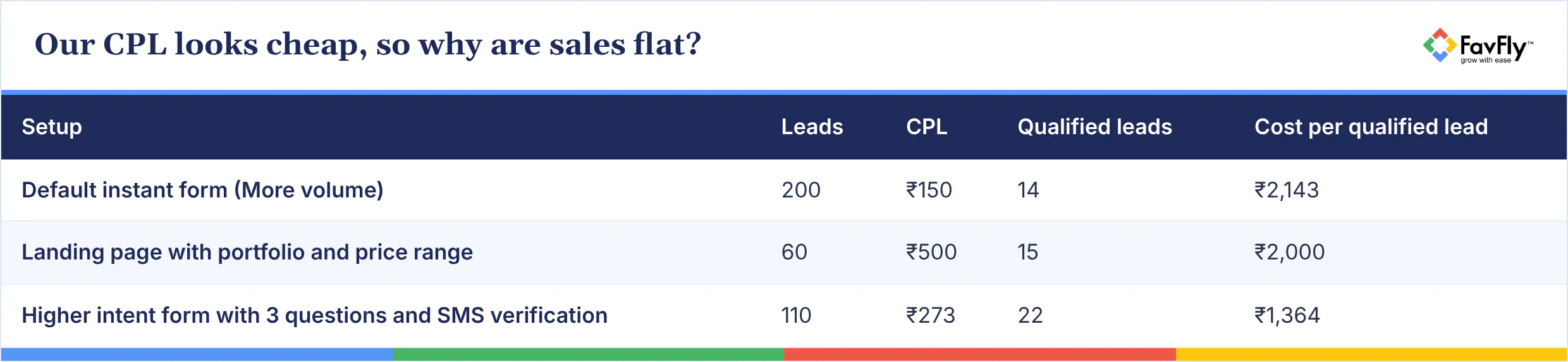
The default form looks best in Ads Manager and worst in the sales register. The tightened form wins here because it removed the casual sign-ups without making anyone leave the app. Your numbers will be different, and that's rather the point: track CPQL for a month before you decide. Our guide to Meta Ads metrics covers which KPIs belong in your columns, and the ads budget calculator helps you set the spend.
Why do Facebook instant forms bring junk leads?
Because submitting one is too easy. Meta's default form type, More volume, is designed to make submitting quick on mobile and to generate a larger number of leads, and that also lets in people with low intent.
The complaints we hear are nearly always the same few. "They say they never filled any form" usually means the prefilled fields did the work: someone opened the form, tapped twice and submitted while scrolling Reels on the metro, without really registering what they'd signed up for. "Half the numbers are switched off or wrong" is prefill again, because it pulls whatever phone number the person once gave Meta, and in our experience that's often an old SIM or a family member's number. Then there's the freebie crowd. Offers like "Free skin consultation" or "Win a gold coin" attract people who want the free thing and nothing after it.
"By the time we called, they'd forgotten us"
This one is on your team. A lead who gets a call two days later is far colder than one called in five minutes. Meta's own guidance on responding to leads says minimising follow-up time can improve lead quality, and it suggests running lead ads during business hours so you can respond quickly. It's the cheapest fix in this whole post, and the one we see skipped most.
How do you improve Meta lead quality on instant forms?
A little friction, a lot of speed. Friction makes the casual sign-ups drop off. Speed means the serious ones hear from you while they still remember your ad. What we switch on first (all of it sits in Meta Ads Manager in 2026):
- Switch the form type to Higher intent. According to Meta's page on instant form types, you get a review screen where people confirm their details and a note that your business may follow up. Mobile Facebook and Instagram feeds only, though.
- Add two or three multiple choice questions on budget, timeline and location ("Which area is the property in?" "When do you want to start?"). Meta's lead ads best practices put the trade-off plainly: fewer multiple choice questions bring more submissions, while more questions typically bring more quality leads. We'd take the quality.
- Got more than one service? Use conditional logic, which changes the next question based on the previous answer. A dental clinic in Behala could ask "Implants, braces or cleaning?" and then show the right follow-up question for each.
- Turn on SMS verification. Meta's phone number verification feature asks people to enter a one-time password sent to their mobile before the form submits, and unverified attempts aren't counted as leads. For B2B, the work email validation filter does a similar job for email addresses.
- Write the intro screen like a filter. Mention the starting price ("Modular kitchens from ₹1.8 lakh") so people outside your budget skip the form.
- Get leads into your CRM or WhatsApp the second they land. A direct CRM integration or something like Zapier does it, with a WhatsApp alert to your team. (Downloading a CSV once a day is how good leads go cold.)
- Call within five minutes during working hours. If nobody can pick up the phone at 11 pm, don't schedule the ads for 11 pm.
- Tell Meta what happened. Pick the Maximize number of qualified leads goal, and once your CRM is connected through Conversions API for CRM, send back which leads became customers. Meta then learns who to find more of.
Honestly, most forms we audit are missing several of these, and it's rarely the hard ones.
When do landing pages bring better leads?
When the purchase is expensive or needs explaining. If someone has to think about price, compare options or trust your work before they enquire, the page does that convincing before the form shows up, so the people who submit are already half sold.
In practice that means high-ticket services (interiors, real estate, cosmetic dentistry, wedding photography, overseas education), B2B products where buyers need specifications first, such as industrial machines, and offers that need proof like portfolios, before-and-after photos and client reviews. It also suits businesses that want to track the full path from click to enquiry with the Meta Pixel, Conversions API and Google Analytics.
"But landing pages cost so much more per lead"
Yes, they do. Is that a problem? Not if each qualified lead is worth ₹50,000 or more to you. And the page sticks around after the campaign: you can retarget everyone who visited and reuse it on Google Ads. Just make it fast, because a page that takes six seconds to open on Jio 4G loses people before the headline even loads (we see plenty of those).
What this looked like for a B2B client
Swarnabha Industries is an industrial recycling company, and our Meta Ads work for them brought in 3,080+ leads. Look at the portfolio page and you'll see machine-specific landing pages were part of the setup. That's where we'd start for any B2B buyer who wants specs before enquiring: one page per product.
Can you use instant forms and landing pages together?
Yes, and for many businesses the mix works best.
The easiest route is to let Meta pick. It now offers a Website and instant forms conversion location, where people who click your ad go to whichever destination they're more likely to convert on, and you can set value rules if one location matters more to you. The catch is that with this combination, Maximize number of leads is the only performance goal available, so you can't use the qualified leads goal on the same ad set. That's a big catch, in our view.
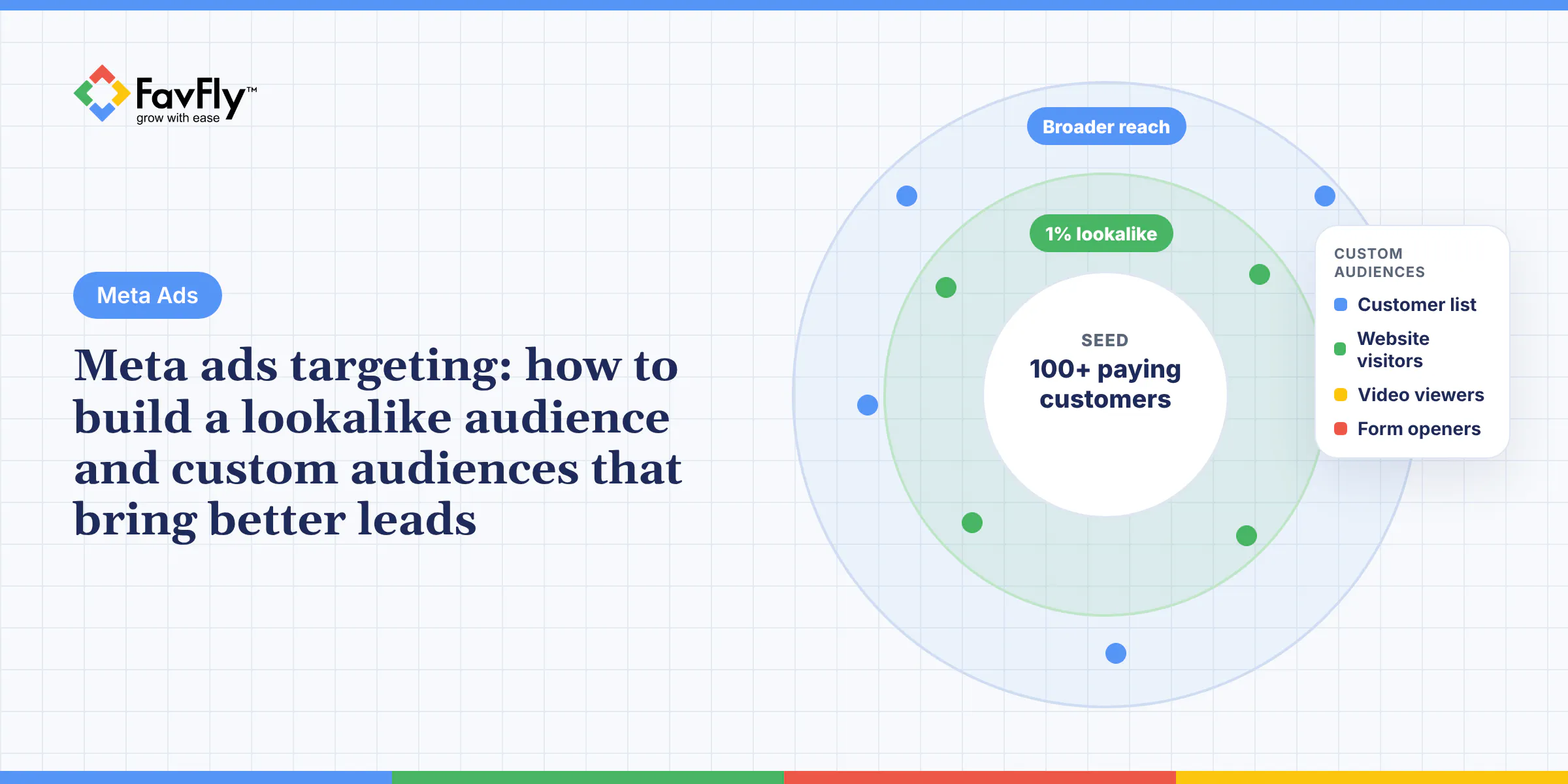
Or split by funnel stage. Run instant forms for cold audiences to collect interest cheaply, then retarget form openers, video viewers and page visitors with a landing page ad that shows prices, reviews and case studies. Our post on the Meta Ads funnel explains how to structure those stages.
The version we like most for Indian buyers is a landing page with a "Chat on WhatsApp" button right beside the form. Many people would rather type "price?" on WhatsApp than fill in a form, and you still get the page to pre-sell them.
And click-to-WhatsApp ads?
Third option. The ad opens a WhatsApp chat with your business, and there's no form or page in between. It suits businesses where the sale happens in conversation, such as salons, clinics, coaching centres and boutiques, as long as someone can reply within minutes. If you run a boutique in Gariahat and most sales already happen over WhatsApp, this is probably your format.
The risk is the same as with instant forms, only louder. A "Hi" with no follow-up becomes a dead chat. So set up quick replies, a greeting message and catalogue items first, and our guide to the WhatsApp Business account covers that setup.
Facebook lead ads vs landing page: which should you choose?
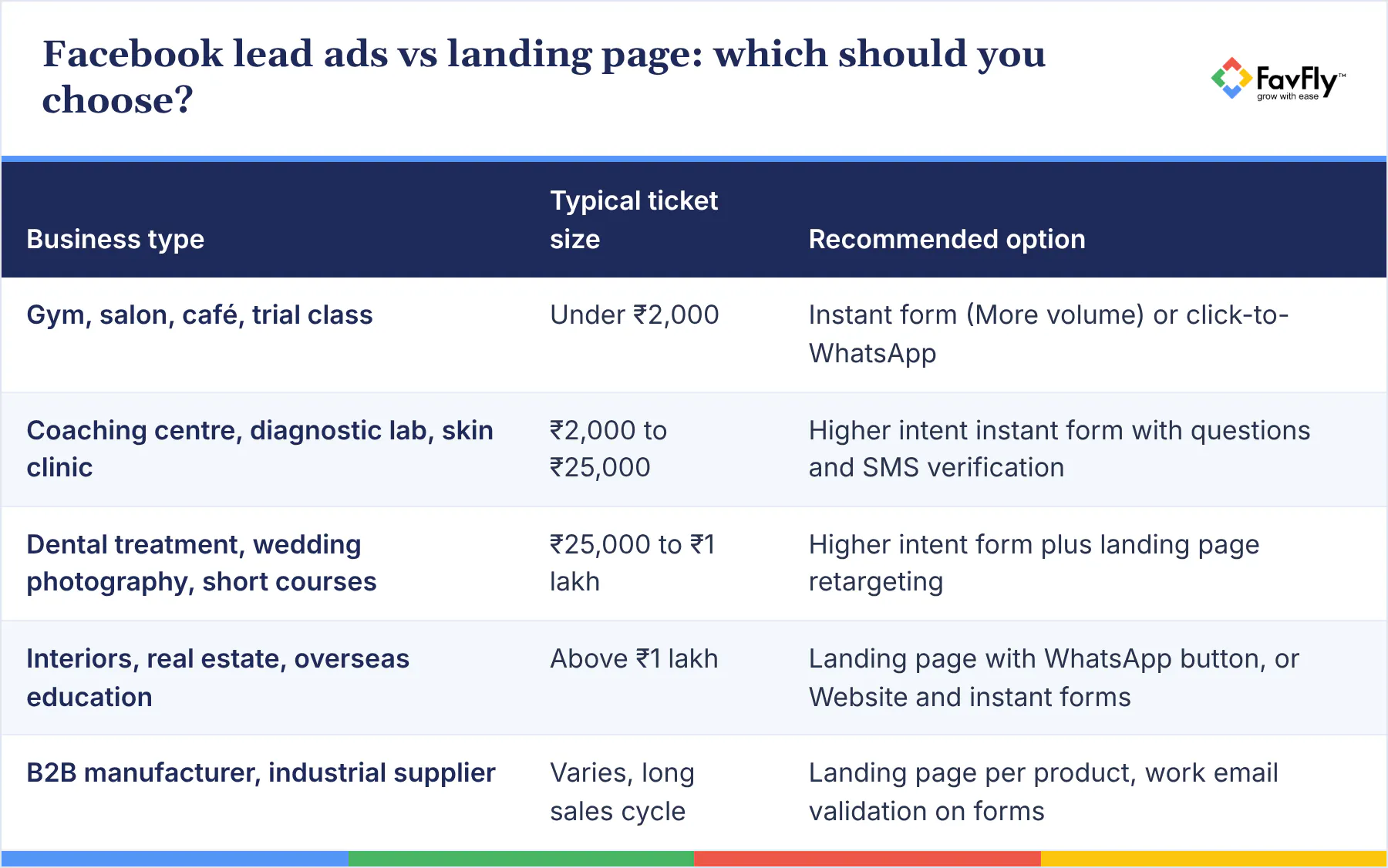
Choose by ticket size and by how much explaining your offer needs. Treat this table as a rule of thumb from what we see across lead campaigns, then let your cost per qualified lead decide after four weeks.
How we decide at FavFly
At FavFly, we pick the destination after asking one question: what does a qualified lead look like for this client, and what does it cost today? Low-ticket offers rarely need a page. The Facebook campaign we ran for The Hybreed Gym brought in 59 leads in 7 days. For a high-ticket B2B buyer, we build the page first.
Frequently asked questions
Are Facebook lead ads better than landing pages?
On cost per lead, yes. On how serious the leads are, landing pages usually win. So it comes down to your ticket size and how you sell: for low and mid-ticket offers, a Higher intent instant form with a few qualifying questions often gives the lowest cost per qualified lead, and for high-ticket or B2B offers, landing pages tend to come out ahead.
Why are my Meta lead ads leads so bad?
Usually the form is just too easy. The default More volume form prefills everything, so people submit without much thought. Switch to Higher intent, add two or three multiple choice questions on budget and timeline, turn on SMS verification, and call every lead within minutes. The junk drops sharply once you've got friction and speed in place.
What is a Higher intent form on Facebook?
A Meta instant form type with an extra review screen, where people confirm their details before submitting, plus a note that the business may follow up. Mobile Facebook and Instagram feeds only. It's under Form type.
Can I verify phone numbers on Meta lead forms in India?
Yes. Meta lists a few countries where phone number verification isn't available, and India isn't one of them. People get a one-time password by SMS and enter it before the form submits. Small print: landlines can't be verified, and a verified number isn't asked again for 90 days.
Do I need a website to run Facebook lead ads?
No, though you'll need a privacy policy link. Instant forms run entirely inside Facebook and Instagram. A website still helps for landing page ads, retargeting and building trust before the sales call.
How fast should I call a Facebook lead?
Within five minutes, during working hours. Meta's own guidance says reducing follow-up time can improve lead quality and recommends running lead ads when your team can respond, so pipe the form into a CRM or a WhatsApp alert and let sales see each lead the moment it lands.
Pick the form your sales team can close
Cheap leads feel good for a week. Then your sales team quietly stops opening the lead sheet. So before you choose between instant forms and landing pages, agree on what a qualified lead means for your business and start counting it.
For most Indian SMBs, that means starting with a tightened Higher intent form, adding a landing page when the ticket size climbs, and calling every lead before their chai gets cold.
Want help with this? Book a free consultation with FavFly and our Meta Ads team will review your forms, pages and follow-up, and show you your real cost per qualified lead.
Start Growing in Just 3 Simple Steps
We assess your goals, craft a tailored strategy, and finally implement it so you can confidently grow your business.
Book a free consultation


Join Our WhatsApp Channel
Join our privacy friendly whatsapp channel and stay up to date with the latest news, updates, and exclusive offers. Join our community today!
Get Free Access
Solutions ❇️
Popular Gigs 📈
Tools 🛠️
- Ads Budget Calculator
- UnifyleadsSoon
- ShareUsReviewSoon
- BrandItSoon
- GrowSoon
FavFly Solutions for Your Digital Growth:
SEO Services in Kolkata | Local SEO Company in Kolkata | Digital Marketing Company in Kolkata | Social Media Marketing Services in Kolkata | WebStudio Website Development | UGC Reels Creation Services | Google My Business for Gynecologists | Google My Business for Restaurants | Google My Business Guide | Google My Business for Dentists | Google My Business for Interior Designers | Google My Business for Doctors | How Google My Business Profile Works
* About Us : At FavFly, we redefine digital marketing by focusing on what truly matters: your growth. We don’t just offer services like SEO, SMM, and website development – we become an integral part of your success story, providing strategic guidance and innovative solutions that empower your business to reach new heights.