- Last Updated Oct 19, 2026Published Date Oct 15, 2026
Ask a sweet shop owner in Gariahat who their best customers are and you'll get the answer before you've finished the question. The families who order two kilos of sandesh every Pujo, and then send their relatives too.
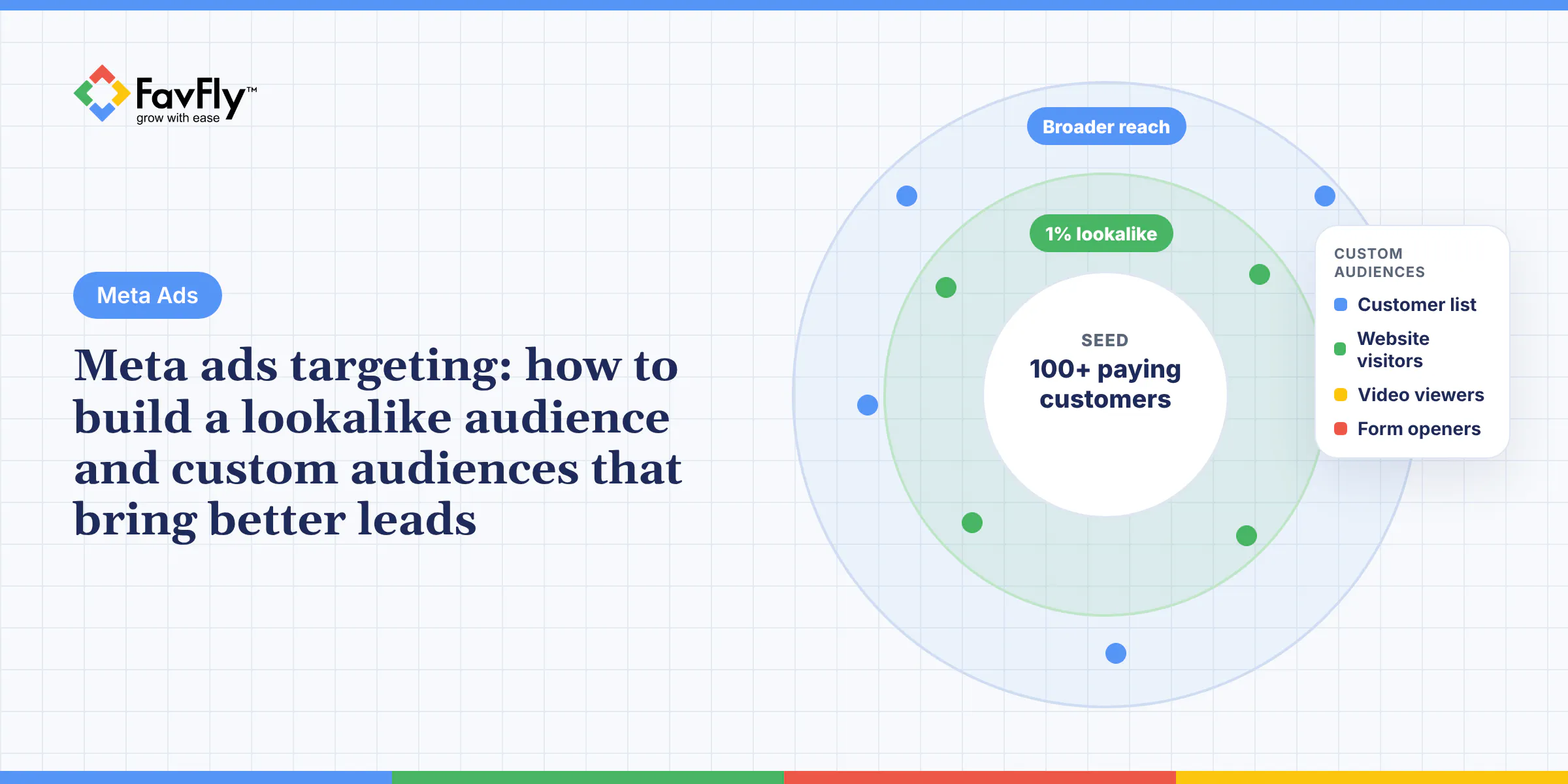
A lookalike audience is Meta's way of finding more people like those regulars. You hand it a seed list of your best customers and it looks for people on Facebook and Instagram who resemble them. In 2026, though, most Facebook ads targeting happens inside Advantage+ audience, which is Meta's automated targeting, so your job has changed a bit. You feed it strong suggestions (a lookalike built from qualified leads or buyers, plus custom audiences of people who already know you) and you lock down the few controls that still matter: location, minimum age and exclusions.
Quick answer: Under Advantage+ audience, most of what you add is only a suggestion, and the strict controls are location, minimum age, language and custom audience exclusions. Build your lookalike from qualified leads or buyers (at least 100 people in one country), start at 1%, and use custom audiences such as website visitors, video viewers, lead form openers, engagers and customer lists for retargeting and exclusions. Detailed targeting exclusions were removed in 2025, so exclude customers and recent leads with custom audiences instead, and if you're a local business, use a pin-drop radius, which Meta allows from 1 to 80 km.
How does Meta ads targeting work in 2026?
These days Meta finds most of your audience by itself. With Advantage+ audience switched on, the delivery system can look beyond your targeting inputs for people it predicts will convert. Only your hard limits stay fixed.
Meta's Advantage+ audience documentation puts it this way: it expands "the eligible audience pool the delivery system can search", while "non-negotiable business constraints" stay as you set them. Those are location, minimum age, language and custom audience exclusions. Everything else you add (custom audiences, lookalikes, interests, gender, maximum age) is treated as an audience suggestion, a starting point that Meta is free to go past.
The changes that catch people out
Detailed targeting exclusions are gone, for a start. Meta's developer blog announced their removal in January 2025, so no more excluding people by interest. (Custom audience exclusions still work, thankfully.)
Then age. Turn on Advantage+ audience and the minimum age control only goes from 18 to 25, with the maximum fixed at 65. Lookalikes stretch now as well: Advantage lookalike, on by default for supported goals, lets Meta reach past the lookalike you picked whenever it expects better results.
So what's still in your hands? The conversion event you optimise for, your creative (the ad itself tells Meta who it's meant for), the quality of your seed data, and your controls.
"We tried broad targeting and got junk leads"
We hear this one constantly, and it's rarely the targeting's fault on its own. Broad targeting works when Meta gets good signals. If your Pixel only reports form fills and your ad shouts "Free consultation!", Meta will very happily go and find you freebie hunters. Send qualified-lead events back through the Conversions API, and make the creative specific about price range, locality and who it's for.
If leads are still poor after that, switch to the original audience options in the ad set and narrow things down. Same goes for, say, a coaching institute in Dum Dum that needs to reach parents aged 35 and above, since the Advantage+ minimum age stops at 25.
What are custom audiences on Facebook and Instagram?
A custom audience is a group of people who've already interacted with your business, built from your own data or from engagement on Meta. They do three jobs for you: retargeting, exclusions and lookalike seeds.
Customer lists are the ones you upload yourself, phone numbers or emails, and every number needs the +91 country code. Then there are the audiences Meta builds from activity, each with a maximum look-back set out in Meta's engagement audience docs and its website audience guide. Website visitors are people the Meta Pixel saw on your site, from 1 to 180 days. Video viewers get grouped by how much they watched. Lead form audiences cover people who opened your Instant Form, opened it without submitting, or submitted it, for up to 90 days. Instagram engagers (profile visitors, people who engaged and people who messaged you) and Facebook Page engagers (people who engaged, messaged or clicked your Page buttons) both go back up to 730 days.
What about WhatsApp enquiries? The simplest route is a customer list. Export the contacts who enquired on WhatsApp and agreed to hear from you, then upload them.
What to show each of these groups, and when, is in our Meta retargeting guide, so we won't repeat it here.
What is a lookalike audience, and how do you build one that brings better leads?
A lookalike audience is a group of new people Meta finds who resemble a seed audience you give it. Meta's lookalike documentation says the seed can be a custom audience, your campaign conversions or your Page fans, and it needs at least 100 people from one country. A new lookalike takes 1 to 6 hours to fill, and Meta refreshes it every 3 days while it sits in an ad set.
Why a "qualified leads" seed beats an "all leads" seed
Meta copies whatever pattern is in your seed, warts and all. Feed it all 2,000 form fills, including the fake numbers, the students who wanted a free sample and the people from the wrong city, and the lookalike learns those patterns too. Feed it the 300 leads your team marked qualified, or the people who paid you, and it learns what a buyer looks like. In our experience, a small clean seed beats a big messy one almost every time.
If you're choosing what to seed with, this is the order we'd go in, best first:
- Paying customers from the last 12 to 24 months (customer list)
- Leads your CRM marked qualified, site visit booked or won
- Website visitors who reached your thank-you page
- Instant Form submitters, only if your form filters out time-wasters
What lookalike size should you choose?
Ads Manager lets you pick anything from 1% to 10% of a country, with 1% the closest match. For India even 1% means millions of people. But location is a hard control, so a 1% India lookalike combined with a Kolkata radius only shows ads inside that radius. Start at 1%. Test 1% to 3% if delivery is slow.
Do lookalikes still matter under Advantage+? Yes, as suggestions. A good one points Meta at the right kind of person from day one, which helps most in new ad accounts that don't have much conversion history yet.
Which exclusions should every lead campaign use?
Exclude anyone who has already converted or is already in your pipeline, so your prospecting money goes on new people. Custom audience exclusions stay strict even with Advantage+ audience on, which makes them one of the few hard levers left.
That means your existing customers (upload them as a customer list) and your leads from the last 30 to 60 days, using lead form submitters and thank-you page visitors. Staff and vendors too, if they keep clicking your ads (the cousin who does your accounts has probably watched every reel twice). Inside prospecting ad sets, exclude your retargeting audiences as well.
Also stop two of your own ad sets chasing the same people. Overlap pushes up your own costs, which we get into in our guide to scaling Meta ad campaigns without wasting budget.
Local radius targeting for Kolkata businesses
Drop a pin on your address and set a radius. Meta's targeting reference allows anything from 1 to 80 km around a custom location, and it reaches people who live there or were recently there.
How big? A clinic in Salt Lake might start at 5 to 8 km, which takes in Lake Town, Kestopur and parts of New Town. A salon in Behala can go tighter, 3 to 5 km, because in our experience salon regulars come from close by. An interior designer usually wants 20 to 30 km to cover the metro, Howrah and Rajarhat included. And a coaching institute with branches should run one radius and one ad set per branch, so one area can't swallow the budget.
Watch the "recently there" part. A small pin on Park Street will also catch a lot of office-goers who live nowhere near it.
Audience types and when to use them
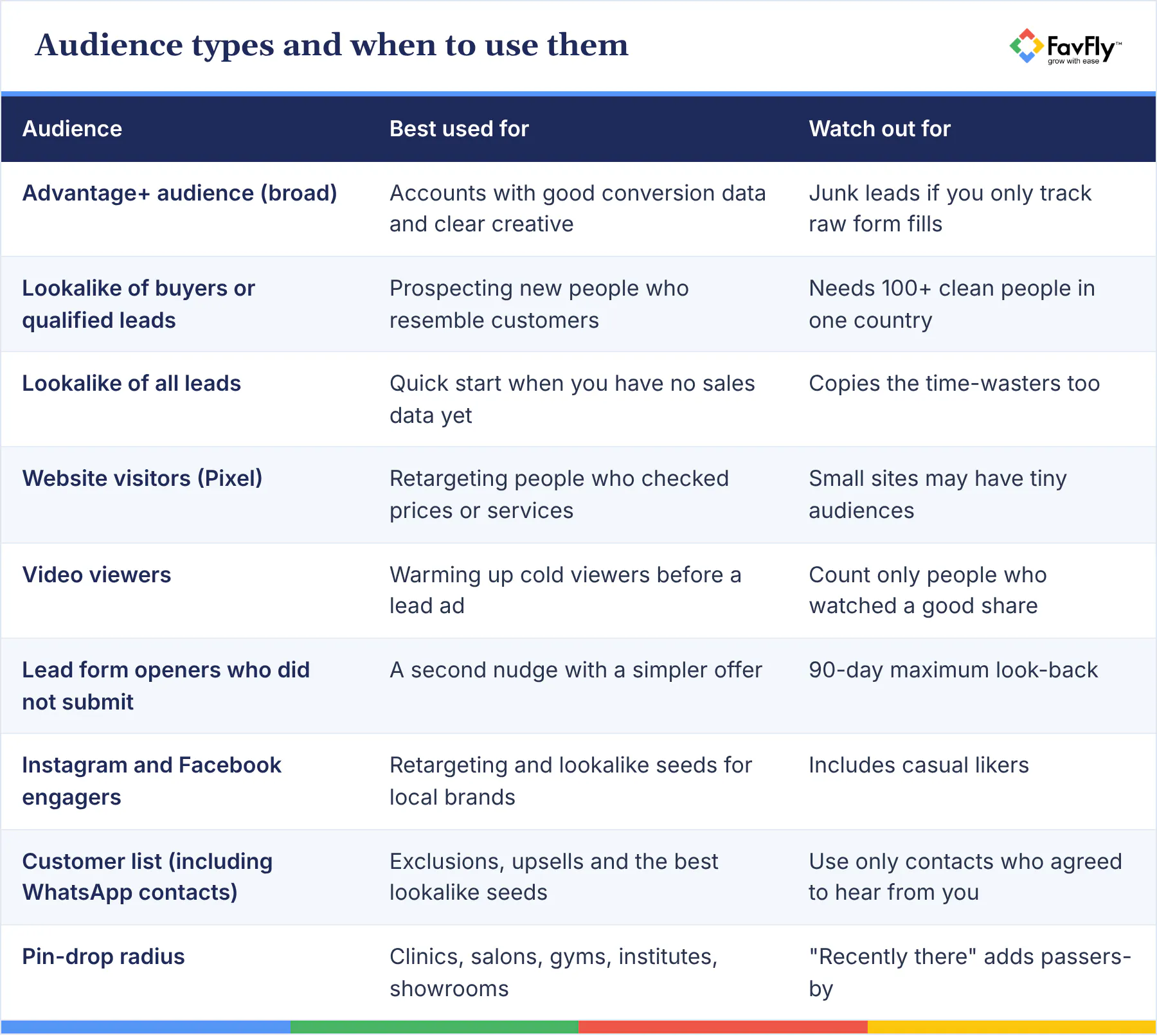
Okay, so where should a clinic, interior designer or coaching institute start?
Start with one prospecting ad set, one retargeting ad set and a clean exclusion list. These are the mixes we'd begin with for three businesses we see a lot of in Kolkata.
Say you run a clinic
Set a pin-drop radius of 5 to 8 km and leave Advantage+ audience on. Your best suggestion is a 1% lookalike of leads who booked appointments, sent over from your CRM. Retarget website visitors from the last 30 days along with your lead form openers, and exclude patients you've seen in the last six months plus leads from the last 30 days.
Be careful how you name and build audiences. Keep them around services, like "dental check-up". Since September 2025, Meta has flagged custom and lookalike audiences that suggest specific health conditions, and a flagged audience can't run. This one annoys clinic owners, but it's not worth fighting.
If you're an interior designer
Go wide, 20 to 30 km across Kolkata, New Town and Howrah, with minimum age set to 25. Seed with signed clients plus site visits booked, and if that comes to fewer than 100 people, add qualified leads. Interior decisions take months, so long windows help here: retarget people who watched most of your project walkthrough reels and your Instagram engagers from the last year. Exclude past clients and anyone currently in your pipeline.
Coaching institutes
First work out who decides. For school courses that's the parents, and Meta limits ad targeting options for teens anyway. If you need parents aged 35 and above, switch off Advantage+ audience so the age range holds. Run one radius and one ad set per centre, seed a 1% lookalike from confirmed admissions, retarget form openers who didn't submit with a free demo class, and exclude enrolled students.
Where each of these audiences sits in your funnel, cold to warm to hot, is mapped out in our Meta ads funnel guide.
How we set up targeting at FavFly
At FavFly, every Meta Ads account starts with a look at where leads come from, which of them turn into sales, and whether the tracking can even tell the difference. Only then do we build seeds from qualified leads or buyers, set up custom audiences and exclusions, and draw the radius.
Two results from our portfolio show the kind of numbers this work feeds into. Swarnabha Industries got 3,080+ leads, and The Hybreed Gym got 59 leads in 7 days from a Facebook campaign. Targeting was one part of each. The offer, the creatives and the landing pages mattered just as much, and we'd be fibbing if we said otherwise.
Wondering how much to spend while new audiences learn? Our free ads budget calculator will give you a starting number.
Frequently asked questions
What is a lookalike audience on Facebook?
Think of the Gariahat sweet shop again. You hand Meta your list of regulars (or your best leads), and it goes off and finds people on Facebook and Instagram who resemble them, in whichever country you pick. So you're reaching new people who are more likely to behave like the customers you've already got.
How many people do I need to create a lookalike audience?
At least 100 from a single country. For lookalikes built from campaign conversions, Meta asks for at least 100 conversions and recommends 200 or more. Honestly, quality beats size here: in our experience, 200 paying customers make a better seed than 5,000 unfiltered form fills.
What lookalike percentage is best?
Start with 1%. In India that's already millions of people, and your location control narrows it to your city or radius anyway. Go to 2% or 3% only if the ad set struggles to spend, since bigger percentages trade similarity for reach.
Is Advantage+ audience better than manual targeting?
For most lead campaigns with decent conversion data, Advantage+ audience performs well, because Meta can search beyond your guesses. Manual targeting still makes sense when you need a strict age range above 25, when you're testing one audience, or when broad delivery keeps bringing poor leads even after you've fixed tracking and creative.
What is the difference between a custom audience and a lookalike audience?
Custom = people who already know you. Website visitors, video viewers, form openers, engagers, your customer list. You retarget them or exclude them. A lookalike is strangers who resemble one of those groups, so you use it to find new prospects who look like your best customers.
Can I target people within a few kilometres of my shop on Facebook?
Yes. Drop a pin on your address in Meta Ads Manager and set a radius between 1 and 80 km, and Meta reaches people who live there or were recently there. For a clinic, salon or gym in Kolkata, 3 to 8 km is a sensible place to start.
One thing to try this week
Build a 1% lookalike from your last 100 or more paying customers and test it against whatever audience you're running now. That single test will tell you more about your account than another month of fiddling with interests.
Good targeting in 2026 mostly comes down to what you feed Meta. A clean seed of real buyers, tight exclusions and a radius that matches how far your customers really travel will do more than any clever interest stack. After that, judge every audience on cost per qualified lead and keep the ones that bring customers through the door.
Want help building audiences that bring better leads? Book a free consultation with FavFly or explore our Meta Ads service.
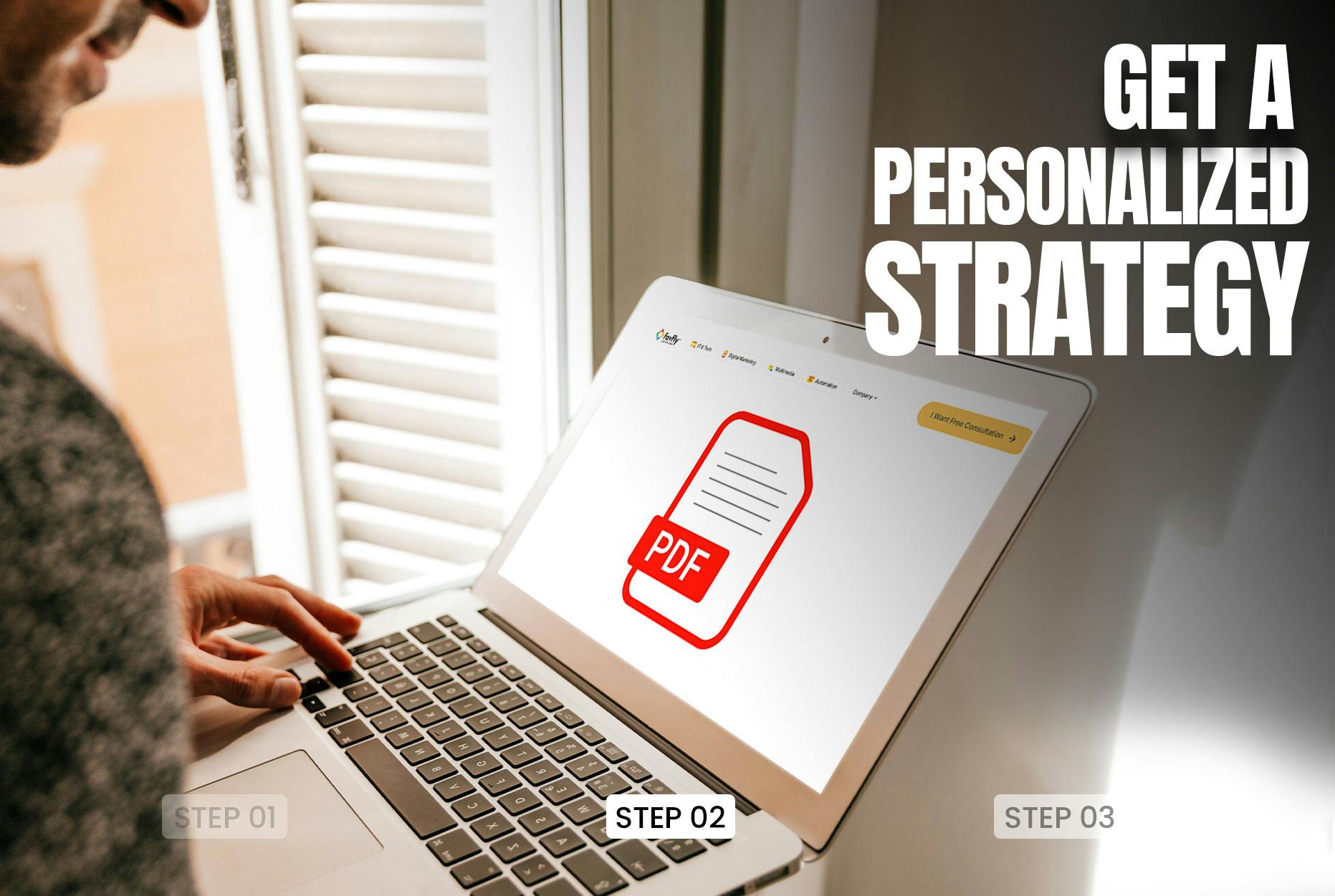
Start Growing in Just 3 Simple Steps
We assess your goals, craft a tailored strategy, and finally implement it so you can confidently grow your business.
Book a free consultation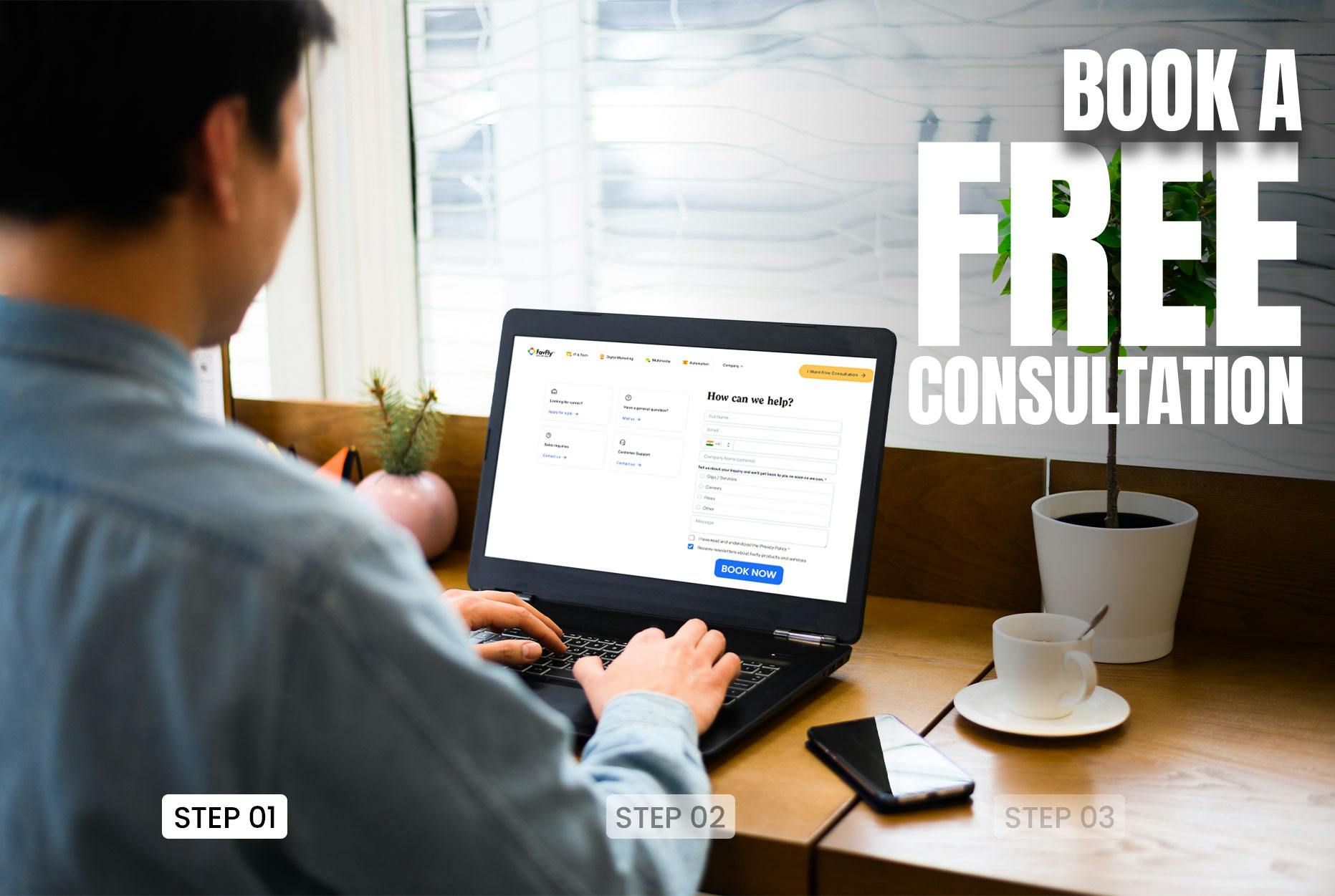

Join Our WhatsApp Channel
Join our privacy friendly whatsapp channel and stay up to date with the latest news, updates, and exclusive offers. Join our community today!
Get Free Access
Solutions ❇️
Popular Gigs 📈
Tools 🛠️
- Ads Budget Calculator
- UnifyleadsSoon
- ShareUsReviewSoon
- BrandItSoon
- GrowSoon
FavFly Solutions for Your Digital Growth:
SEO Services in Kolkata | Local SEO Company in Kolkata | Digital Marketing Company in Kolkata | Social Media Marketing Services in Kolkata | WebStudio Website Development | UGC Reels Creation Services | Google My Business for Gynecologists | Google My Business for Restaurants | Google My Business Guide | Google My Business for Dentists | Google My Business for Interior Designers | Google My Business for Doctors | How Google My Business Profile Works
* About Us : At FavFly, we redefine digital marketing by focusing on what truly matters: your growth. We don’t just offer services like SEO, SMM, and website development – we become an integral part of your success story, providing strategic guidance and innovative solutions that empower your business to reach new heights.