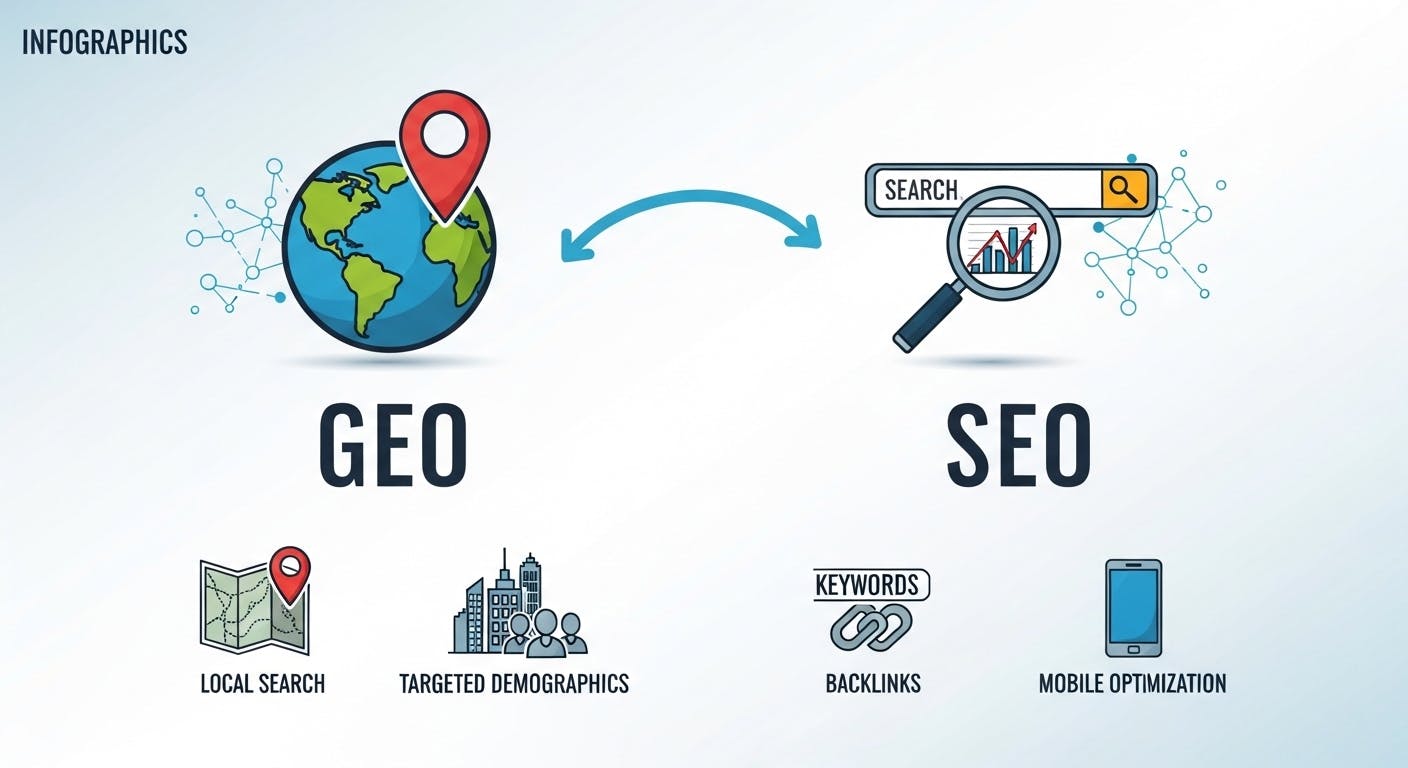
- Last Updated Feb 05, 2026Published Date Feb 04, 2026
For a long time, SEO (Search Engine Optimization) had one clear goal:
👉 rank higher on Google and get clicks.
But in 2026, search doesn’t work the same way anymore.
Today, users don’t just search they ask.
And instead of ten blue links, they increasingly see AI-generated answers, AI Overviews, and summaries created by large language models (LLMs).
This shift has introduced a new concept into the SEO world:
GEO Generative Engine Optimization.
In this guide, we’ll break down:
- What GEO really is
- How GEO differs from traditional SEO
- The key differences between GEO and SEO
- Why GEO does not replace SEO
- How GEO and SEO work together
- How marketers should optimize for both in 2026
- How to future-proof search visibility in an AI-driven world
Whether you’re a brand, marketer, or working with SEO companies in Kolkata or offering SEO services in Kolkata, understanding this shift is no longer optional.
If you care about search rankings, AI visibility, and long-term organic growth, this is essential reading.
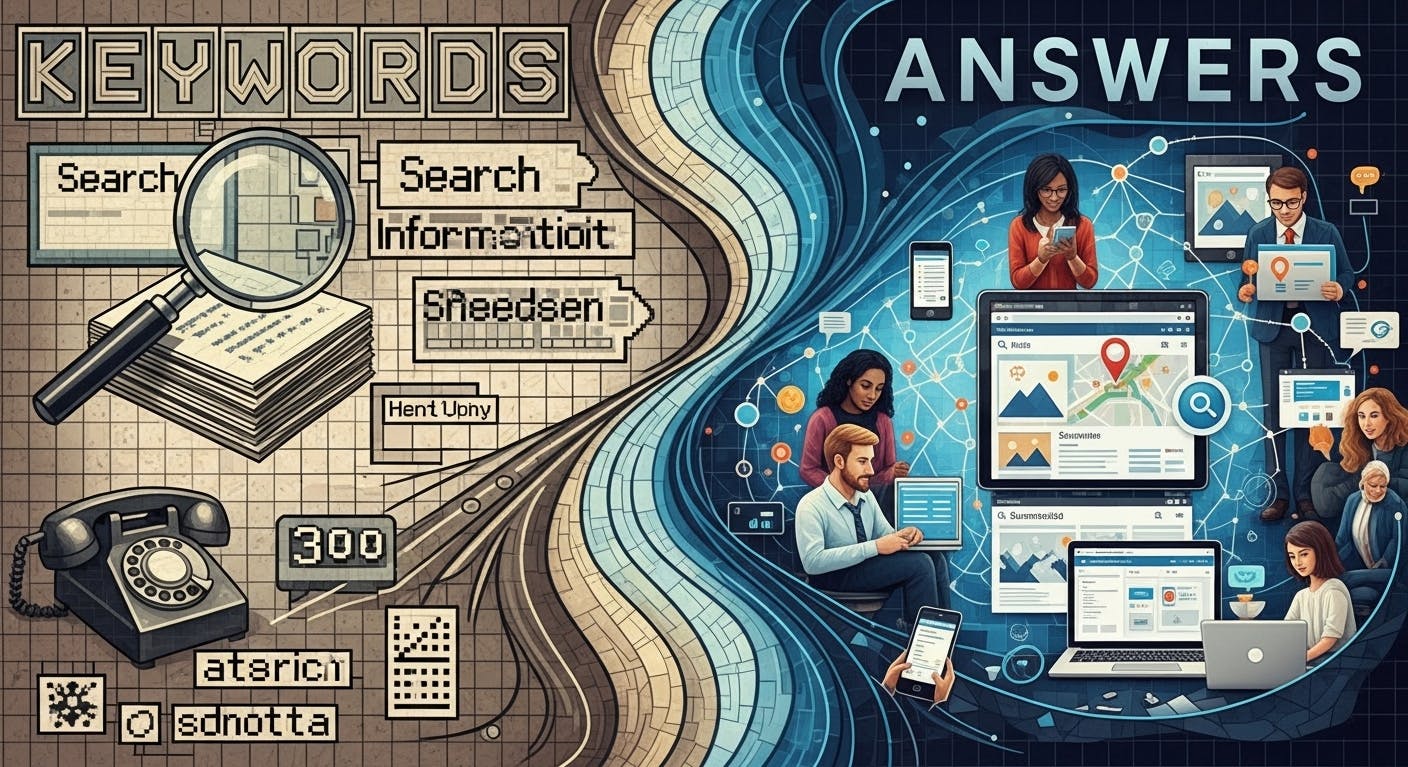
The Evolution of Search: From Keywords to Answers
To understand GEO vs SEO, we need to understand how search evolved.
The History of SEO (Quick Context)
Traditional SEO was built on:
- Keywords
- Links
- Pages
- Rankings
The workflow looked like this:
- User types a keyword
- Search engine matches pages
- Results appear on the SERP
- User clicks a link
SEO, therefore, focused on influencing how search engines work by improving:
- Keyword optimization
- Technical SEO
- Backlinks
- On-page optimization
This model worked extremely well for years.
What Changed? AI Entered Search
The introduction of generative AI, AI-powered search, and large language models changed everything.
Modern search now includes:
- AI Overviews
- AI summaries
- AI-generated answers
- Conversational AI search
- Follow-up queries
- Context-aware responses
Users increasingly search using:
- Full questions
- Natural language
- Multi-part queries
- Conversational prompts
And AI systems respond with answers, not just links.
This shift is what made GEO (Generative Engine Optimization) necessary.
What Is SEO? (Traditional Definition)
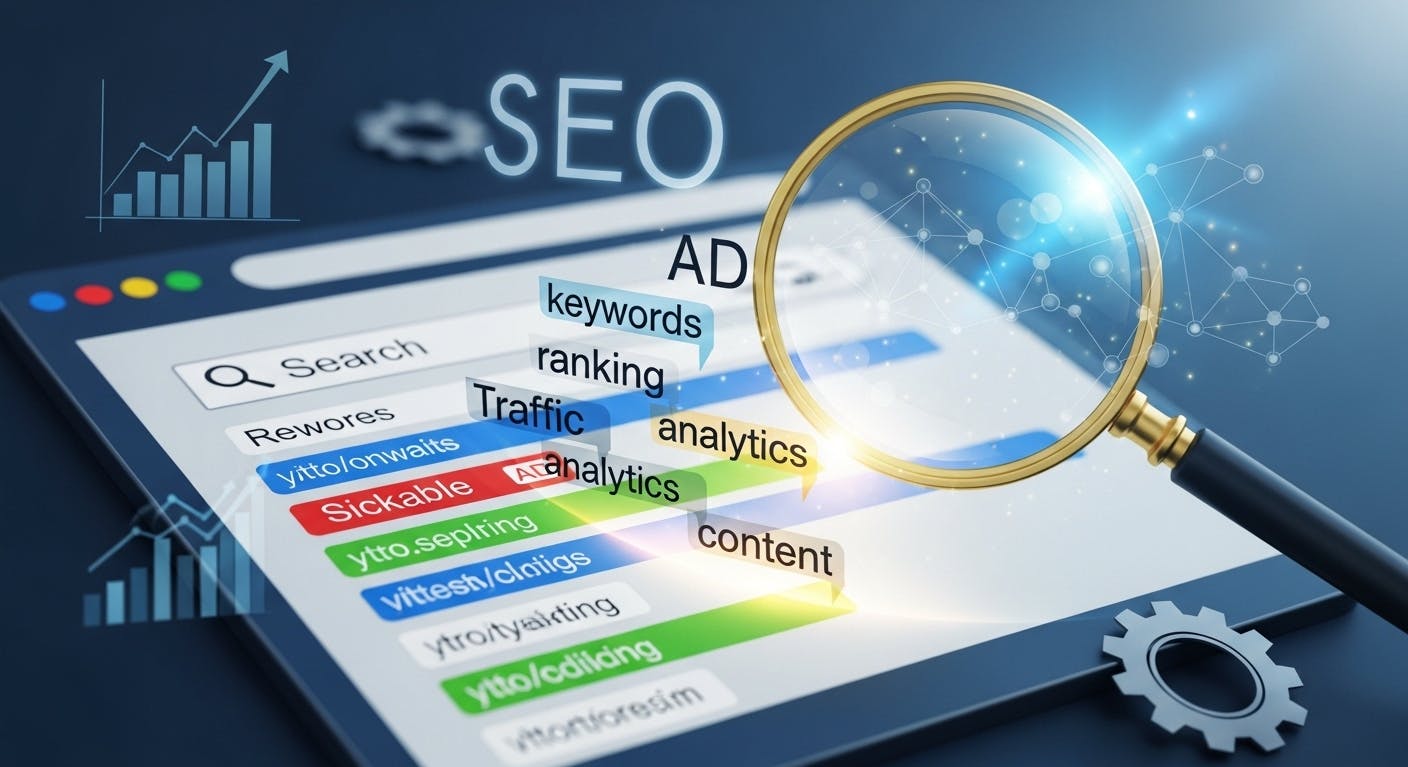
SEO (Search Engine Optimization) is the practice of optimizing websites and content to rank higher in traditional search engines.
SEO focuses on:
- Keywords
- Search rankings
- SERPs (Search Engine Results Pages)
- Organic search traffic
- Technical SEO
- Backlinks
- Content optimization
What SEO Aims to Do
SEO aims to:
- Improve search visibility
- Rank higher in search results
- Drive clicks from organic search
- Capture search demand
In short:
SEO focuses on ranking pages.
What Is GEO? (Generative Engine Optimization)
GEO (Generative Engine Optimization) is the practice of optimizing content so that AI-driven search engines and generative AI systems can:
- Understand your content
- Extract accurate information
- Summarize your content
- Cite or reference your brand
- Use your content to generate answers
GEO focuses on:
- AI-driven search
- AI Overviews
- AI answers
- LLM-friendly content
- Structured data
- User intent over keywords
In short:
GEO focuses on influencing answers.
Read more: How Zero-Click Searches and Featured Snippets Impact SEO

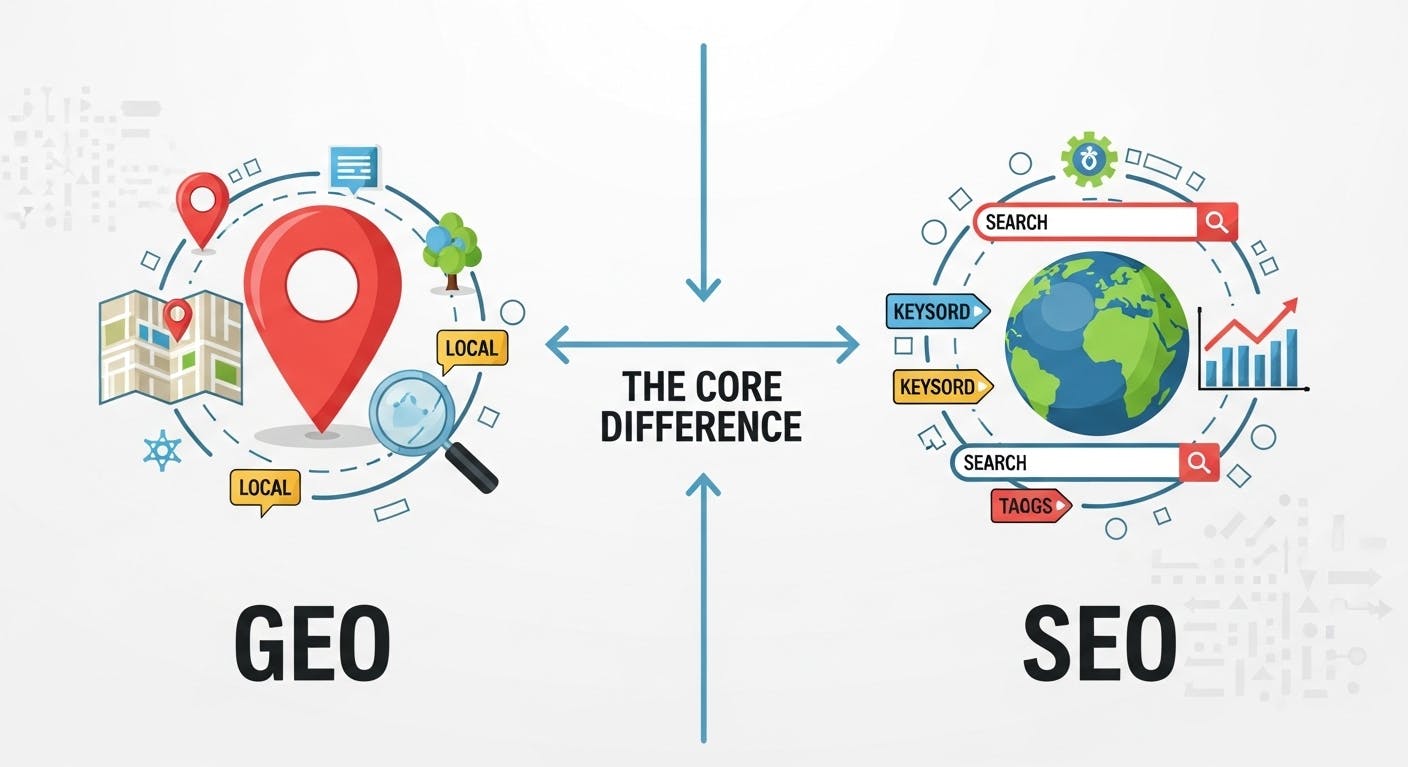
GEO vs SEO: The Core Difference (Explained Simply)
Here’s the simplest way to understand the difference between GEO and SEO:
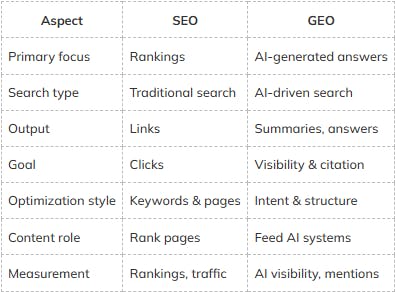
SEO helps your page rank.
GEO helps your content get used by AI.
SEO = position
GEO = presence inside answers
This distinction defines the future of search.
GEO vs SEO: Side-by-Side Comparison
Why GEO Exists (And Why SEO Alone Is No Longer Enough)
Traditional SEO assumed:
- Users click links
- Rankings equal visibility
But AI-driven search changed user behavior.
Today:
- Users get answers directly
- AI Overviews reduce clicks
- Zero-click searches increase
- Visibility happens inside AI answers
This means:
- Ranking #1 may not get clicks
- Being invisible in AI answers means losing exposure
- Search visibility is no longer limited to SERPs
SEO ensures you rank.
GEO ensures you’re visible when AI answers the query.
How AI Search Engines Work (High Level)
AI-driven search engines use:
- Large language models
- Retrieval-augmented generation
- Structured data
- Context-aware ranking
- Multi-source synthesis
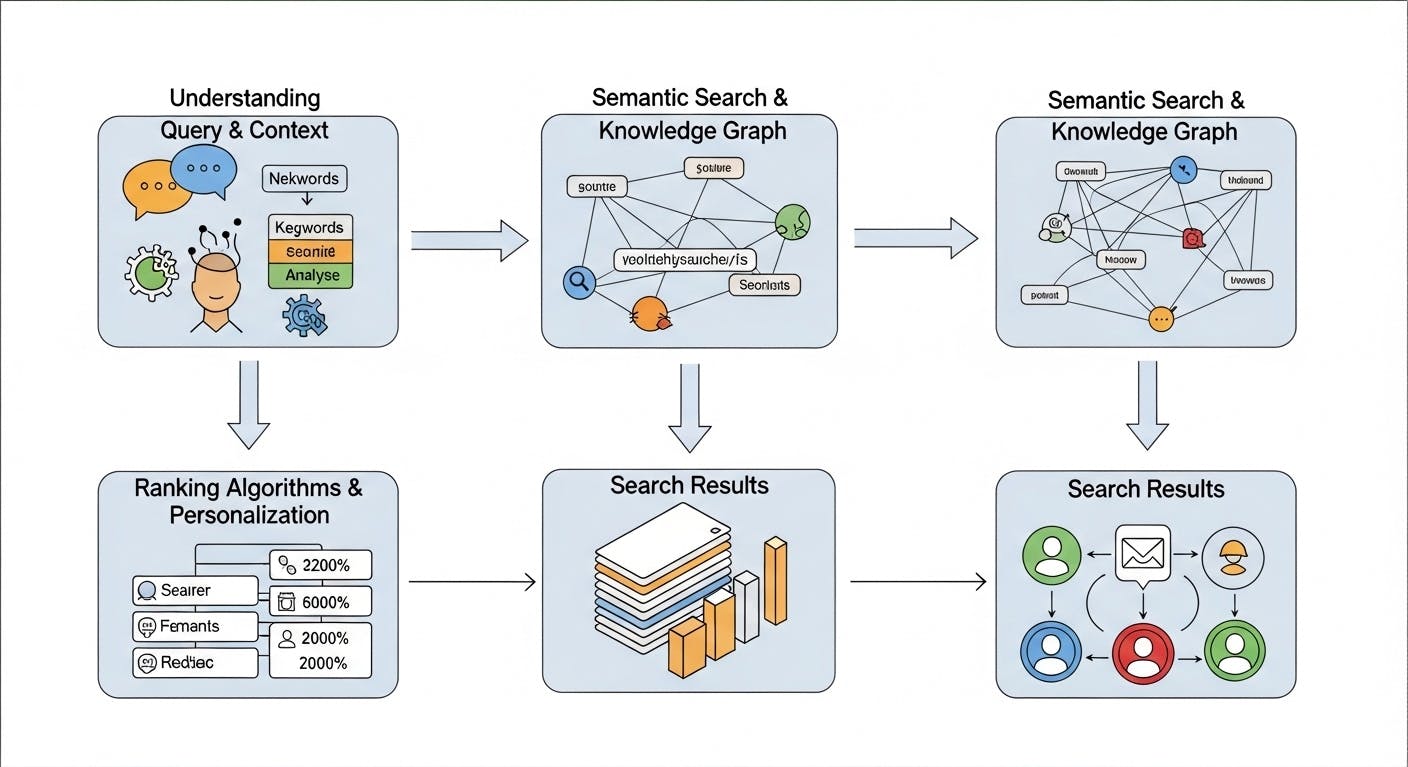
Here’s what actually happens behind the scenes:
- The system understands the user’s query and intent, not just the keywords
- Through retrieval-augmented generation, it pulls relevant information from trusted sources and indexed content
- The language model then generates a coherent answer using that retrieved data
- In some cases, sources are cited or referenced to support the response
This process relies heavily on clear, structured, trustworthy content.
That’s where GEO comes in.
Key Difference #1: SEO Optimizes for Pages, GEO Optimizes for Answers
SEO asks:
“How do I rank this page for a keyword?”
GEO asks:
“How does AI extract, trust, and reuse this content?”
For GEO, content must:
- Answer questions directly
- Be logically structured
- Avoid ambiguity
- Provide clear definitions
- Use consistent terminology
This is why GEO often prioritizes clarity over creativity.
Key Difference #2: SEO Targets Keywords, GEO Targets Queries
SEO traditionally focuses on:
- Keyword research
- Search volume
- Keyword optimization
GEO focuses on:
- Natural-language queries
- Conversational search
- Complex, multi-part questions
- Follow-up questions
Example:
SEO keyword:
“best seo tools”
GEO query:
“Which SEO tools work best for AI-driven search and why?”
GEO optimizes for how people ask, not just what they type.
Key Difference #3: SEO Competes for Clicks, GEO Competes for Inclusion
SEO success = click-through rate.
GEO success =:
- Being referenced
- Being cited
- Being summarized
- Being trusted by AI systems
Even if the user never clicks.
This is a major mindset shift for marketers.
Structured Data: Where GEO and SEO Overlap
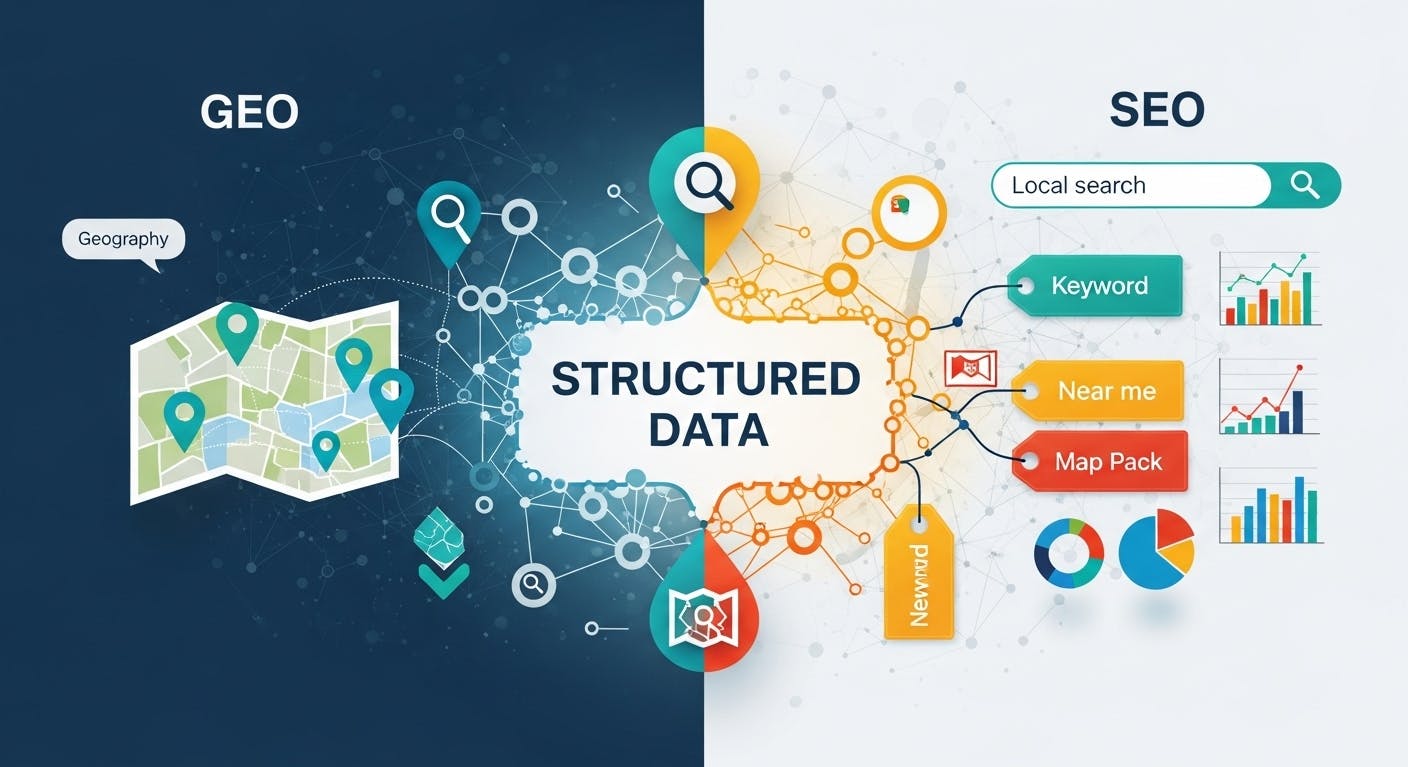
One of the strongest connections between geo and seo is structured data.
Structured data helps:
- Search engines understand content
- AI systems extract facts
- LLMs generate accurate answers
- Reduce misinformation and hallucinations
In SEO:
- Structured data improves SERP features
- Enhances technical SEO
In GEO:
- Structured data increases AI visibility
- Improves citation likelihood
This proves GEO integrates traditional SEO, not replaces it.
Recommended: Why Local SEO is Important for Small Businesses in 2025: Benefits & More
Does GEO Replace SEO? (Short Answer: No)
This is one of the biggest SEO myths of 2026.
❌ GEO replaces SEO
✅ GEO builds on SEO
Without SEO:
- Content isn’t indexed through proper search engine indexing
- Authority isn’t established
- Trust signals are missing
Without GEO:
- Content isn’t visible in AI answers
- Brand disappears from AI-driven search
SEO is the foundation.
GEO is the extension.
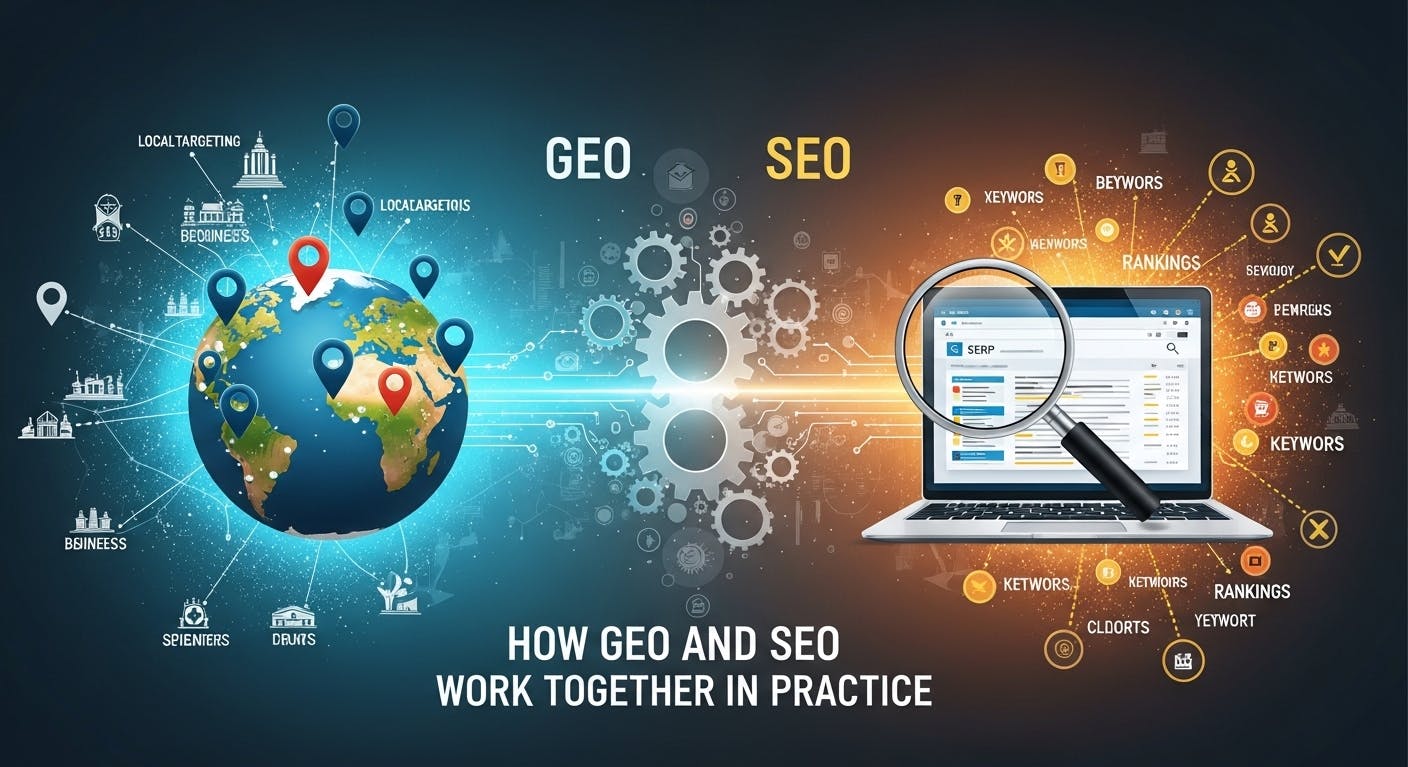
How GEO and SEO Work Together in Practice
Think of search like this:
- SEO gets your content into the system
- GEO ensures AI systems can use it
SEO ensures:
- Crawlability
- Indexation
- Rankings
- Authority
GEO ensures:
- AI readability
- Summarization
- Citation
- Visibility across AI platforms
Together, they create search everywhere optimization.
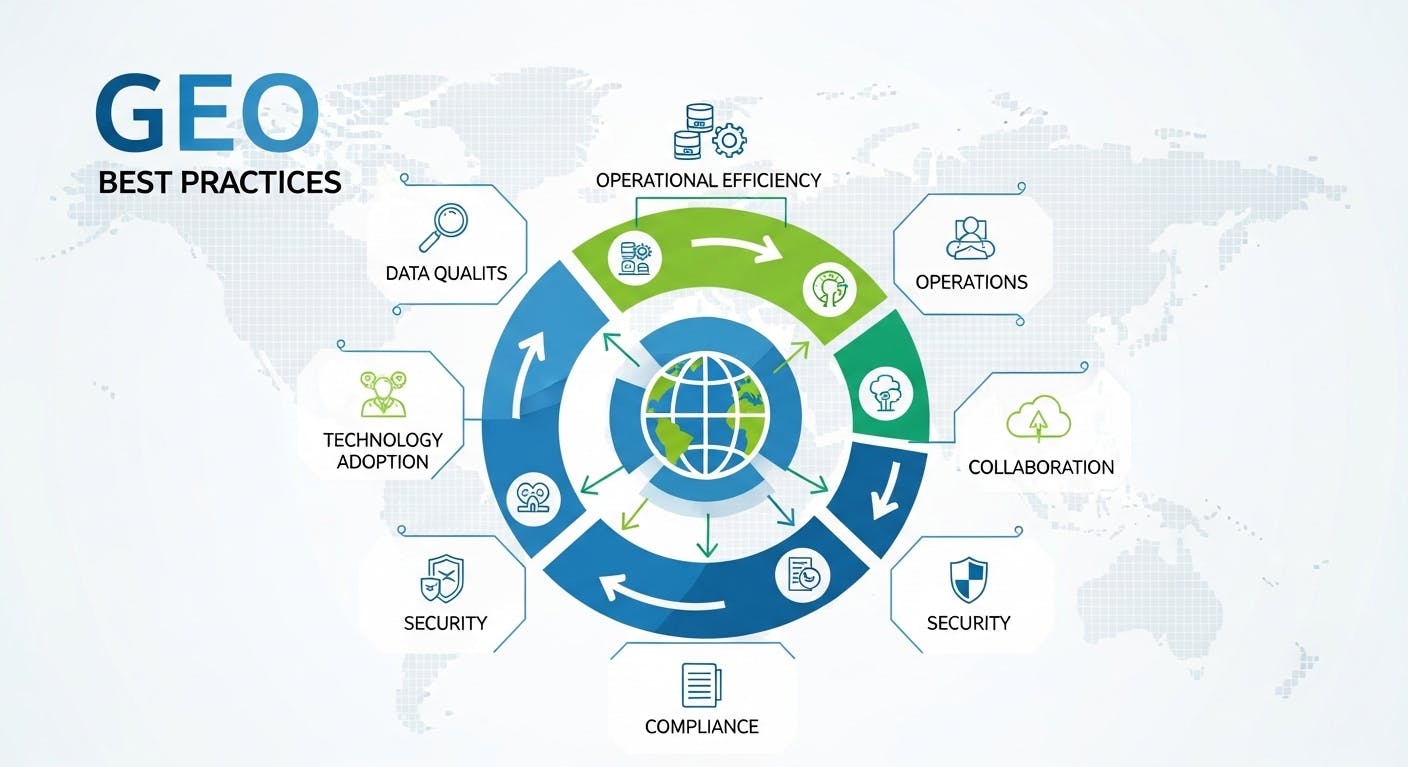
GEO Best Practices (That Still Respect SEO)
Effective GEO strategies include:
- Clear headings and structure
- Explicit definitions
- Question-based sections
- Consistent terminology
- Clean HTML
- Structured data
- Fact-based writing
These don’t hurt SEO they strengthen it.
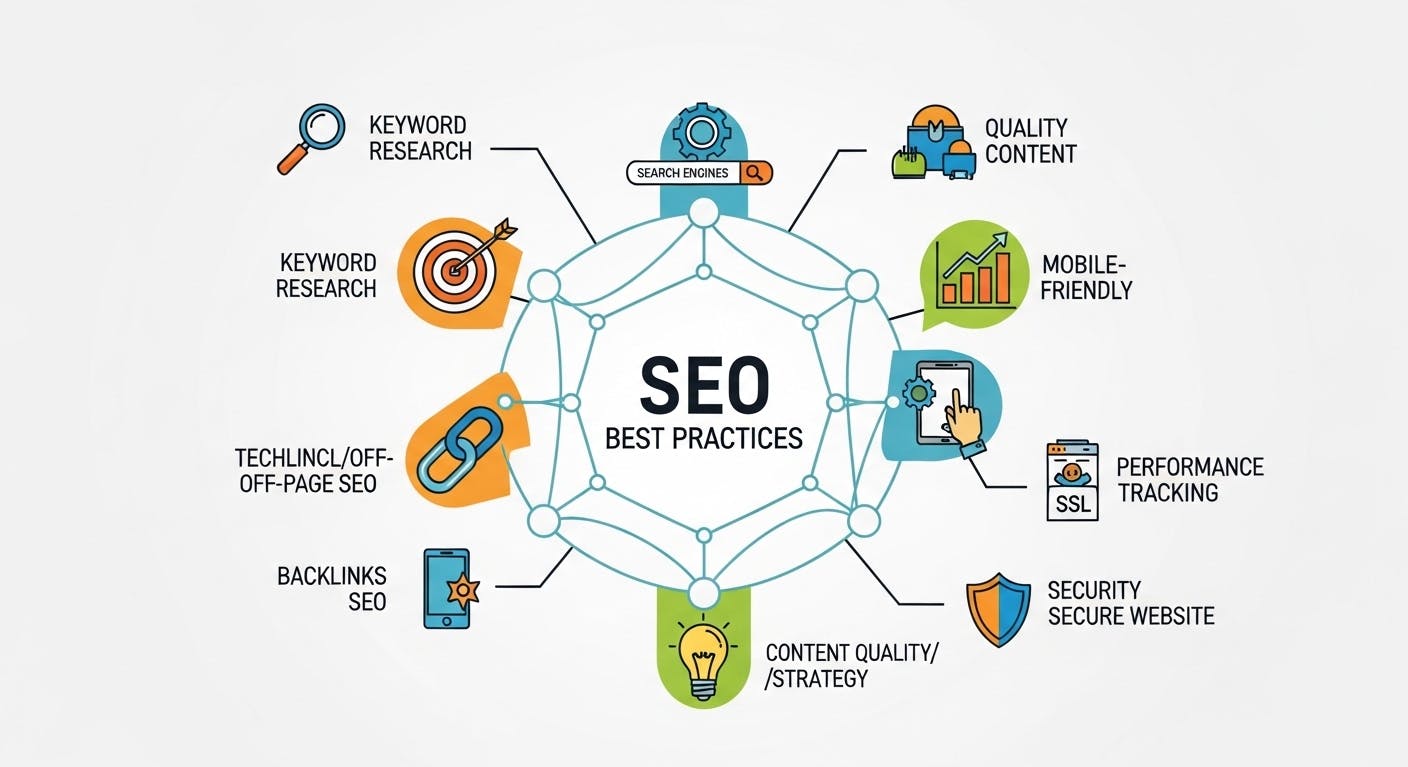
SEO Best Practices Still Matter (Even More)
Despite AI hype:
- Technical SEO still matters
- Page speed still matters
- Internal linking still matters
- Content quality still matters
- Authority still matters
AI systems rely on SEO signals to determine trust.
Strong SEO enables effective GEO.
GEO vs SEO: A Real Example
Query:
“Difference between GEO and SEO”
With SEO:
- You optimize for the keyword
- You rank on page one
- You get organic traffic
With GEO:
- Your definitions are clear
- AI summarizes your explanation
- Your brand is referenced in the AI answer
Best outcome?
You rank and get cited.
That’s GEO and SEO working together.
The Future of SEO and GEO (2026 and Beyond)
Looking ahead:
- AI-driven search will expand
- AI Overviews will dominate more queries
- Traditional SERPs will shrink
- Visibility will matter more than clicks
Businesses that:
- Rely only on traditional SEO
- Ignore AI-driven search
- Optimize only for keywords
…will lose visibility over time.
GEO, SEO, and the Role of Marketers
The role of marketers is evolving.
In 2026, marketers must:
- Understand AI systems
- Optimize for intent
- Focus on content structure and clarity for both humans and AI
- Track AI visibility
- Combine SEO and GEO strategies
SEO professionals are becoming search visibility architects.
Final Verdict: GEO vs SEO Is the Wrong Question
The real question isn’t:
GEO or SEO?
It’s:
How do we use SEO to power GEO?
Final takeaway:
- SEO helps you rank
- GEO helps AI trust and use your content
- Together, they future-proof search visibility
SEO is not dead.
SEO is evolving.
And GEO is part of that evolution.
One-Sentence Summary
SEO helps you rank in search engines.
GEO helps AI-driven search engines use and show your content.
That’s the difference and the opportunity in 2026.
Start Growing in Just 3 Simple Steps
We assess your goals, craft a tailored strategy, and finally implement it so you can confidently grow your business.
Book a free consultation




Join Our WhatsApp Channel
Join our privacy friendly whatsapp channel and stay up to date with the latest news, updates, and exclusive offers. Join our community today!
Get Free Access
Solutions ❇️
Popular Gigs 📈
Tools 🛠️
- Ads Budget Calculator
- UnifyleadsSoon
- ShareUsReviewSoon
- BrandItSoon
- GrowSoon
FavFly Solutions for Your Digital Growth:
SEO Services in Kolkata | Local SEO Company in Kolkata | Digital Marketing Company in Kolkata | Social Media Marketing Services in Kolkata | WebStudio Website Development | UGC Reels Creation Services | Google My Business for Gynecologists | Google My Business for Restaurants | Google My Business Guide | Google My Business for Dentists | Google My Business for Interior Designers | Google My Business for Doctors | How Google My Business Profile Works
* About Us : At FavFly, we redefine digital marketing by focusing on what truly matters: your growth. We don’t just offer services like SEO, SMM, and website development – we become an integral part of your success story, providing strategic guidance and innovative solutions that empower your business to reach new heights.